The Growing Demand for Non-Destructive Excavation
Construction teams across Australia are under more pressure than ever to dig safely, cleanly, and with less disruption. That is a big reason non-destructive excavation is gaining ground across civil, utility, and infrastructure projects.
This guide explains why non-destructive excavation is replacing traditional mechanical digging in sensitive areas. You will see where it works best, why demand is rising, and how it supports safer works, cleaner sites, and stronger compliance.
Key takeaways:
- NDE helps protect underground assets before they become expensive strikes.
- It improves worker safety in tight, live, or high-risk excavation zones.
- It supports minimising water and soil contamination during site works.
- It strengthens proactive spill management, dangerous run-off protection, and regulatory compliance.
What is non-destructive excavation?
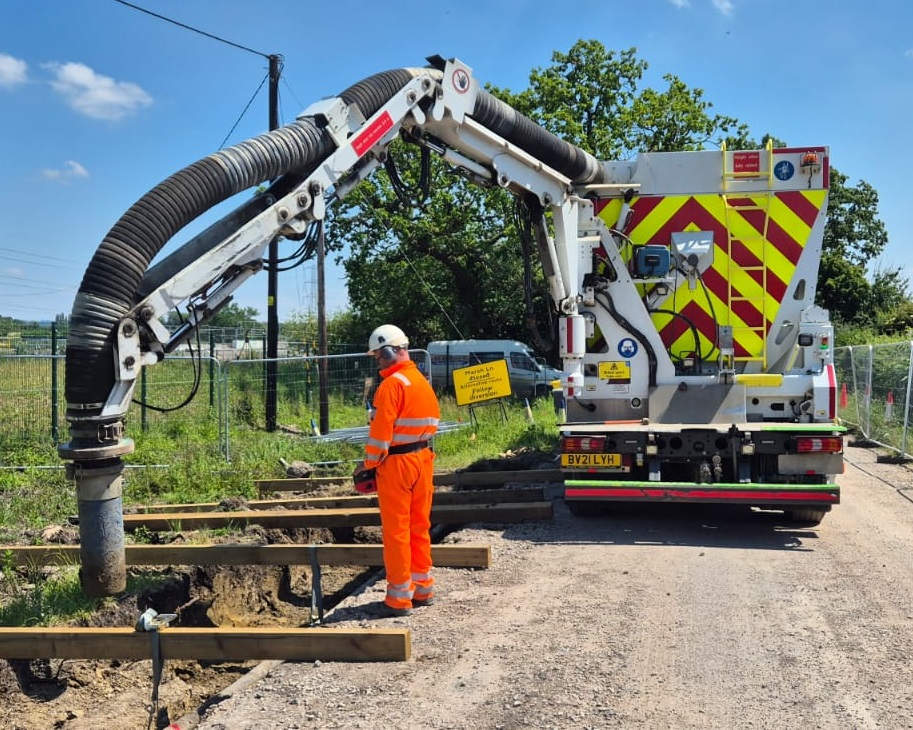
Non-destructive excavation, often called hydro excavation or vacuum excavation, removes soil without the force of mechanical digging. It usually uses pressurised water to break up soil, then vacuum suction to lift the material into a sealed tank.
That process gives crews far more control than a steel bucket or excavator tooth. It is especially useful when buried assets, contaminated ground, or confined work areas raise the risk.
In practical terms, NDE helps teams dig where accuracy matters more than brute force. That is why it now plays a larger role across Australian construction and civil works.
Mini takeaway: If the ground is sensitive, crowded, or uncertain, NDE gives you a safer way to open it.
Why demand for NDE is growing across Australia
The demand for non-destructive excavation is rising because the risks of getting excavation wrong are getting higher. Australian sites now face tighter controls, denser underground networks, and more pressure to avoid delays.
A missed service or poorly managed trench can trigger much more than a repair bill. It can stop works, damage infrastructure, create contamination, and increase reporting obligations.
Several shifts are driving this change:
- More buried utilities in urban growth corridors
- Tighter excavation around live assets
- Stronger client expectations for risk control
- Greater environmental scrutiny on active worksites
- Higher costs linked to delays, rework, and asset strikes
- More emphasis on documented compliance and site records
This is especially true in civil construction, utilities, transport, and infrastructure upgrades. These sectors often work in congested corridors where the cost of error is high.
Mini takeaway: NDE is growing because modern sites need precision, not just speed.
Why traditional mechanical digging is losing ground in sensitive areas
Mechanical digging still has a place on many projects. It moves bulk material quickly and suits open areas with lower underground risk.
But it becomes a weaker option when the work zone is sensitive. Buckets and teeth remove material by force, which increases the chance of over-dig, asset damage, and broader site disturbance.
Sensitive areas often include:
- Live service corridors
- Drainage assets and pits
- Fuel storage areas
- Contaminated ground
- Tree root zones
- Rail and road interfaces
- Tight urban work zones
- Areas near waterways or stormwater systems
In these conditions, a broad excavation method can create problems quickly. A small mistake may trigger service outages, environmental harm, or expensive rework.
NDE offers a more controlled approach. It removes only what is needed and captures material directly during excavation.
Mini takeaway: Mechanical digging works for volume, but NDE works better where risk, precision, and control matter most.
Underground asset protection is one of the biggest drivers
One of the strongest reasons for the growing demand for non-destructive excavation is underground asset protection. Australia’s construction and civil sectors operate above dense networks of pipes, cables, conduits, and drains.
When those assets are damaged, the impact spreads fast. The site may face outages, emergency repairs, programme disruption, and extra cost.
NDE helps reduce those risks because it exposes buried infrastructure with far more control than mechanical methods. Crews can uncover services gradually instead of tearing through the ground.
This is especially valuable when working near:
- Power cables
- Gas lines
- Water mains
- Sewer systems
- Communications conduits
- Stormwater pipes
- Unknown or legacy services
Older service records are not always accurate. On many Australian sites, drawings give a starting point, not certainty. That makes controlled excavation even more important.
Here is what usually happens when an asset strike occurs:
- Work stops immediately
- The area becomes a safety risk
- Emergency crews or specialists may be called
- Repairs delay follow-on trades
- Costs rise across labour, plant, and programme
NDE lowers the chance of that chain reaction. That alone makes it a practical investment on high-risk sites.
Mini takeaway: If buried assets are part of the job, NDE helps protect both infrastructure and project momentum.
NDE improves worker safety on active sites
Safer excavation is another major reason non-destructive excavation is growing across Australian worksites. Workers face real risk when excavation takes place near live services, unstable ground, or traffic-exposed areas.
Mechanical excavation can increase that risk because the operator may not know exactly what sits below the bucket. If the machine strikes a cable, pipe, or gas line, the consequences can be serious.
NDE supports safer work because it allows slower, more accurate exposure of underground features. That helps crews verify conditions before larger excavation begins.
Key safety advantages include:
- Reduced risk of striking live underground services
- Better control in congested service corridors
- Less need for workers to enter unstable excavation zones early
- Improved visibility when exposing buried assets
- Cleaner excavation in tight or confined areas
For site managers, this matters beyond immediate injury prevention. Safer methods often lead to better planning, fewer shutdowns, and stronger confidence across the team.
If you are working around unknown services, high-value infrastructure, or live utilities, safety needs more than caution. It needs the right digging method.
Mini takeaway: NDE helps protect workers by reducing hidden underground risk before excavation escalates.
Environmental benefits are pushing adoption higher
Environmental performance is now a much bigger part of excavation planning than it was a decade ago. Clients, contractors, and regulators all expect tighter control over how ground disturbance is managed.
That is another reason the demand for NDE keeps rising. It can reduce the environmental footprint of excavation when compared with broader mechanical digging.
Minimising water and soil contamination
One of the clearest benefits of NDE is its role in minimising water and soil contamination. Mechanical digging often disturbs more ground than necessary and can mix clean soil with impacted material.
That becomes a problem on sites with:
- Fuel or oil residues
- Contaminated fill
- Industrial runoff risk
- Sediment-heavy drainage points
- Wet waste near pits and trenches
NDE gives crews a tighter excavation footprint. It also removes material directly into a tank, which helps contain slurry, waste, and impacted soils during recovery.
This matters because contamination often spreads during removal, not just during the original incident. Once clean and contaminated materials mix, disposal becomes harder and more expensive.
Mini takeaway: NDE helps minimise water and soil contamination by reducing spread, over-dig, and uncontrolled spoil handling.
Less site disturbance and cleaner spoil control
Mechanical digging usually creates open spoil piles beside the excavation area. Those piles can wash, spread, or track across the site under traffic and rain.
NDE reduces that exposure by collecting material through vacuum transfer. That supports cleaner spoil handling, particularly in urban or environmentally sensitive work zones.
This can help reduce:
- Loose sediment on site
- Surface scarring
- Unnecessary disturbance to nearby ground
- Secondary contamination spread
- Cleanup work after excavation
For busy sites, this also improves housekeeping and reduces the mess that often builds around conventional digging operations.
Mini takeaway: Cleaner material handling leads to cleaner sites, simpler reinstatement, and fewer avoidable environmental issues.
NDE supports proactive spill management
Non-destructive excavation also plays a practical role in proactive spill management. That matters on construction and civil sites where fuel, hydraulic oil, chemicals, slurry, or contaminated water may be present.
A spill becomes harder to control once product enters soil, pits, drains, or trenches. If the response relies on broad digging or delayed cleanup, the affected area often grows.
NDE helps by allowing targeted recovery of:
- Contaminated soil
- Oily sludge
- Liquid waste in pits
- Polluted sediment
- Impacted material around services or drains
That makes it a strong option for both emergency response and planned remediation. Instead of opening a wide area with machinery, crews can recover the impacted zone with tighter control.
This supports proactive spill management in two ways:
- It reduces the chance of spreading contamination during excavation
- It improves recovery when contamination is already present
On high-risk sites, this can reduce follow-up cleanup and support better documentation of what was removed.
Mini takeaway: NDE is not just a digging method. It is also a practical tool for controlled spill response and contaminated waste recovery.
Dangerous run-off protection is easier with NDE
Rain and loose spoil are a bad combination on active sites. If contaminated sediment or waste reaches a drain, the environmental problem becomes much larger.
That is why dangerous run-off protection is a growing concern across Australian projects, especially in wet conditions or near stormwater assets.
NDE helps because excavated material is captured during removal rather than left exposed beside the hole. This reduces the volume of loose material available to wash away.
That supports better control near:
- Kerb inlets
- Stormwater pits
- Swales
- Drainage channels
- Sediment basins
- Waterway-adjacent works
The benefit is simple. Containment starts at the point of excavation, not after runoff has already started moving.
This can be especially useful in metropolitan works where stormwater networks connect quickly to broader catchments. A local spill or sediment issue can travel further than crews expect.
Mini takeaway: NDE supports dangerous run-off protection by limiting exposed spoil and containing waste earlier.
Regulatory compliance is shaping excavation choices
Regulatory pressure is another major reason non-destructive excavation is being adopted more widely. Sites now need stronger proof that they planned excavation carefully and reduced environmental harm where possible.
That means excavation is no longer just an operational decision. It is also a compliance decision.
NDE can support regulatory compliance because it offers a more controlled process for sensitive excavation, contaminated material recovery, and waste handling. That can strengthen site records when an incident, audit, or review occurs.
It can help teams document:
- Where excavation occurred
- What material was removed
- How contaminated waste was contained
- What controls were used near drains or services
- How environmental harm was reduced
This matters when clients, principal contractors, or regulators want evidence of practical risk control.
Mini takeaway: The more sensitive the site, the more valuable a controlled and defensible excavation method becomes.
Why EPA reporting matters more on modern sites
Environmental incidents do not stop at cleanup. They often carry reporting obligations that take time, documentation, and close review.
That is where environmental protection authority (EPA) reporting becomes relevant. If a spill, runoff event, or contamination issue affects land, drains, or waterways, the quality of your response records matters.
NDE can support cleaner EPA reporting because the process is usually easier to track than broad mechanical excavation with mixed spoil piles.
Teams can often record:
- The affected excavation area
- Volumes recovered
- Waste type and handling method
- Disposal pathway
- Timing of containment and removal
- Site conditions at the time of recovery
This does not remove reporting obligations. It does help create a clearer record of what happened and how the site responded.
For project teams, that can mean less confusion during incident review and stronger evidence of responsible action.
Mini takeaway: Clearer excavation and recovery methods often lead to clearer EPA reporting when incidents occur.
Where NDE is being used most across Australian sectors
The growing demand for non-destructive excavation is most visible in sectors where underground risk and environmental pressure are high.
Common use cases include:
- Civil construction near live services
- Road and transport upgrades
- Utility maintenance and verification
- Rail corridor works
- Industrial site remediation
- Drain and pit cleanouts
- Excavation in dense urban environments
- Works near waterways or sensitive vegetation
In each of these settings, the value of NDE comes from precision. The less unnecessary disturbance a site creates, the easier it becomes to manage safety, waste, and compliance.
This is why many contractors now see NDE as a standard risk-control method rather than a specialist extra.
Mini takeaway: NDE adoption is strongest where excavation mistakes carry high operational, safety, or environmental cost.
Practical checklist for site managers considering NDE
If you are deciding whether to use non-destructive excavation on a project, start with a practical review of site risk.
Use this checklist before excavation begins
- Are buried services present, uncertain, or densely packed?
- Is the work near drains, pits, or waterways?
- Could mechanical digging damage high-value infrastructure?
- Is the site prone to spills, sludge, or contaminated runoff?
- Would loose spoil create runoff or tracking issues?
- Is the excavation area tight, live, or hard to access?
- Are you working near roots, existing structures, or sensitive ground?
- Will the project require strong compliance records?
- Could an incident trigger EPA reporting obligations?
- Would a smaller excavation footprint reduce reinstatement costs?
NDE is often the better choice if you answer yes to several of these
You should also review:
- Waste disposal requirements
- Spill response capability
- Available access for vacuum units
- Traffic and public interface risks
- Weather exposure during excavation
- Client and regulator expectations
The goal is not to replace every digging method. It is to use the method that best matches the site risk.
Mini takeaway: If the excavation zone is sensitive, uncertain, or high-risk, NDE should be part of your planning.
What site managers should do next
If your team is seeing more pressure around asset protection, spill control, or environmental performance, review your current excavation approach. Many sites still default to mechanical digging where a more precise method would reduce risk.
Start with your highest-risk work areas first. Look at live service zones, drainage interfaces, contaminated areas, and locations where a spill could spread quickly.
Then ask:
- What could a bucket strike trigger here?
- How much unnecessary ground disturbance are we accepting?
- Would a controlled vacuum method reduce harm, delay, or reporting pressure?
Those questions usually point to the right method quickly.
Conclusion
The growing demand for non-destructive excavation reflects a clear shift in Australian construction and civil works. Sites need better underground asset protection, stronger worker safety, and cleaner environmental performance than traditional broad digging often allows.
NDE meets that need by reducing excavation risk in sensitive areas, supporting minimising water and soil contamination, and improving proactive spill management and dangerous run-off protection. It also helps teams strengthen regulatory compliance and maintain clearer records for environmental protection authority (EPA) reporting.
If you manage excavation risk, review where precision matters most on your sites. That is usually where non-destructive excavation delivers its biggest value.
Meta title: Non-Destructive Excavation Demand in Australia
Meta description: Learn why non-destructive excavation is growing across Australian construction and civil sites. See the safety, environmental, and compliance benefits.