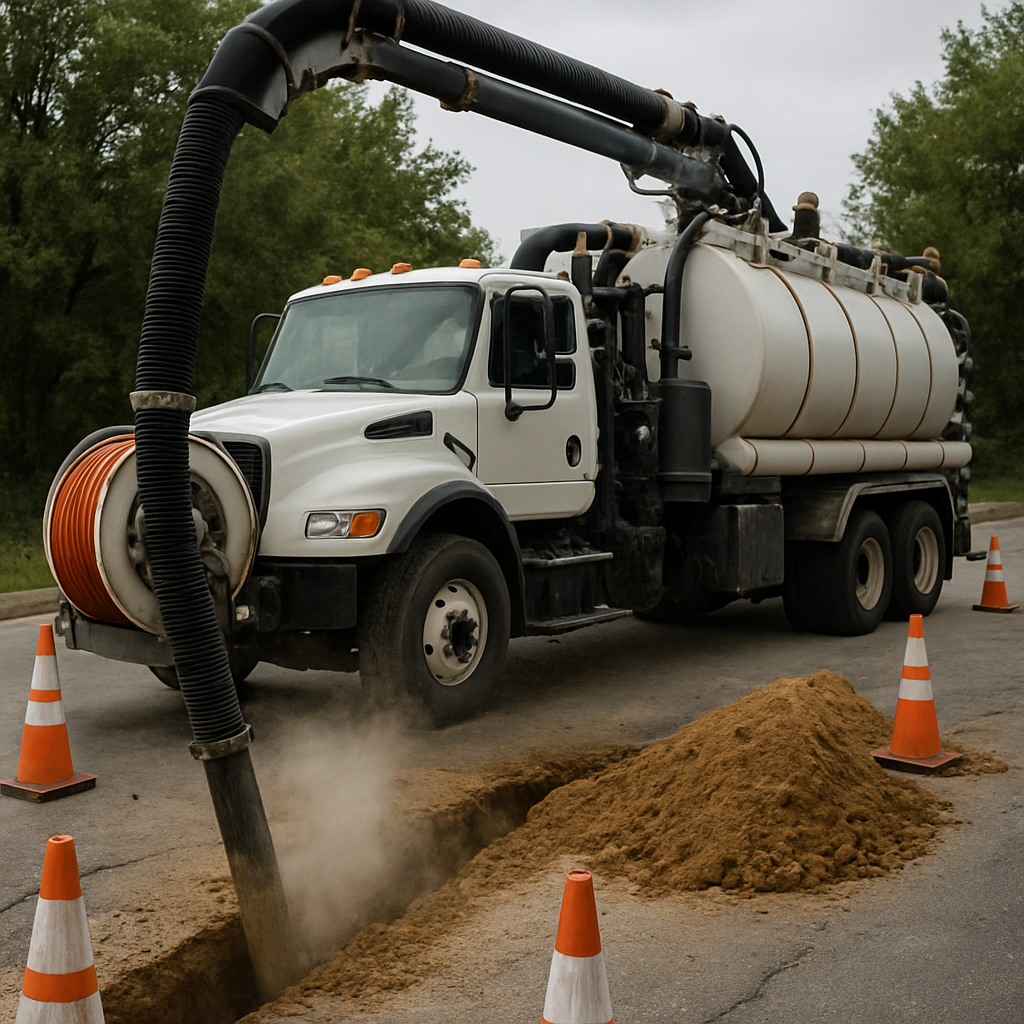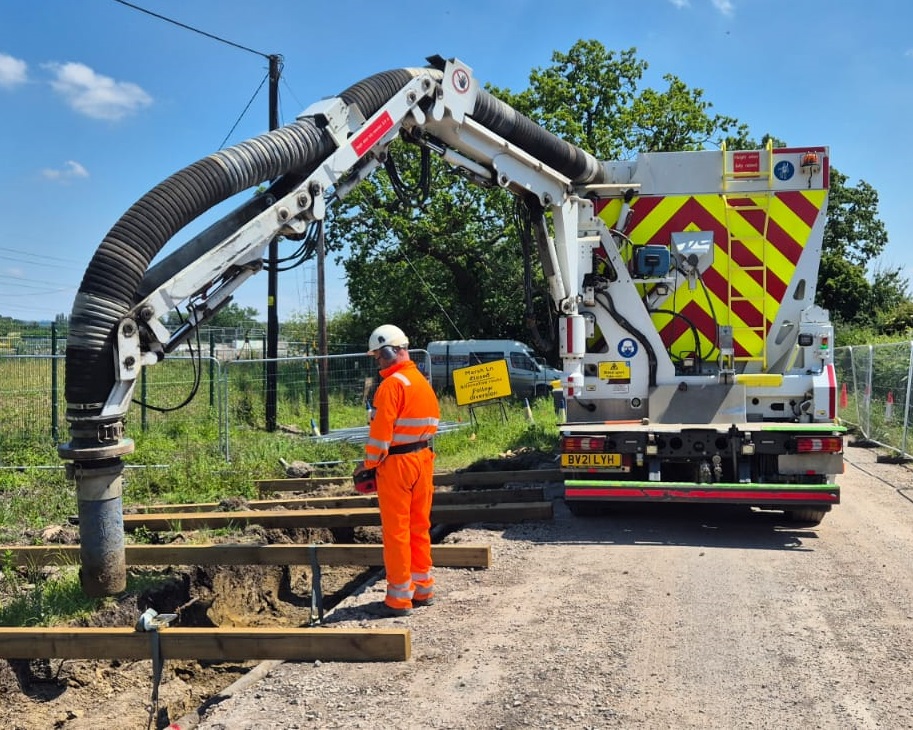
Look at the sight glass or level gauge on the back of a vac truck around mid-morning and you’ll usually know whether someone booked the right size.
I’ve seen it both ways plenty of times. A mid-size Vacuum truck on a civil trench in Rocklea, sitting at three-quarters full by quarter past nine, with the excavator operator leaning on his door waiting. And a 12,000 litre unit that drove across town to a house in Wavell Heights, dug two holes for a plumber, and went home with maybe 300 litres of mud rattling around in the tank.
One crew paid for a day of standing around. The other paid for a heap of truck they didn’t use, plus the grief of getting it into a narrow street.
Capacity sounds like a simple number, but it isn’t. Bigger isn’t automatically better, and smaller isn’t automatically cheaper. It depends on what you’re digging, how much is coming out, where the truck can sit and how far it is to the tip.
Here’s how I’d work it out.
Capacity is more than the spoil tank
When people say “capacity” they usually mean the spoil tank, the big drum on the back that the dirt goes into. That matters, but three other things matter just as much.
Water tank. On a hydro job you’re spraying water the whole time you’re cutting. If the water runs out before the spoil tank fills, the truck stops anyway. A truck with a decent spoil tank and a small water tank can be a real trap on a long day in clay.
Suction. The blower and the hose size decide how fast material actually comes up the pipe. Two trucks can have similar tanks and dig at very different speeds. Bigger units usually pull more air and run a fatter hose, so they lift heavy, wet clay faster and hold their suction better over a long hose run.
Legal weight. This one catches people out. Wet slurry is heavy, a lot heavier than water. On plenty of trucks you’ll hit the legal mass limit before the tank is full by volume, especially in heavy Brisbane clay. So a “10,000 litre” tank doesn’t always mean 10,000 litres of slurry per load. Ask the operator what a realistic payload looks like in your ground, not just what’s written on the tank.
Operators also don’t run tanks right to the brim. There’s a shut-off to stop muck getting into the filters and blower. Count on a bit less than the sticker number.
Your dirt gets bigger once it’s out
If you take one thing from this, take this.
A cubic metre of dirt in the ground doesn’t go into the tank as a cubic metre. Once you’ve cut it with water, it’s slurry. The soil loosens up and the water adds volume on top. Depending on the ground and how heavy the operator is with the lance, the tank can fill a lot faster than the hole size suggests. Sometimes it’s double, sometimes worse.
So when you work out how much is coming out, don’t just measure the hole. Allow for the water, then allow a bit more.
Air vac doesn’t have this problem, at least not as badly. The spoil comes out dry and fairly close to its loosened volume, and often goes straight back in the hole. It’s slower in clay, though, so it’s a trade-off.
When a smaller truck is plenty
A small or mid-size unit does the job fine, and usually better, on more jobs than people think.
Residential service exposure. A plumber needs the water service and sewer junction exposed at the front of a house in Kedron. Two holes, a fraction of a cubic metre between them. A small truck parks out front, digs both, and it’s gone before morning tea. The tank’s barely a quarter full. That’s fine. You weren’t paying for tank, you were paying for a careful dig.
Footpath potholing. Half a dozen potholes along a footpath in Woolloongabba to confirm depths before a bore. Each hole is small and the dig is slow and careful because there’s gas and telco in there. Volume isn’t the problem, precision is. A mid-size truck handles a day of that easily, and it’s a lot easier to park on a busy street with traffic control than a big civil unit.
Tight-access sites. Pier holes down the side of a Queenslander in Bardon, steep driveway, narrow street, low trees. A big truck either can’t get there or ends up parked so far away that you lose your suction on the long hose run. A smaller truck that can get closer often digs faster than a big one stuck at the corner. A short hose off a small truck can beat a long hose off a big truck.
If the hard part of the job is not hitting anything, you probably don’t need a big tank. You need a good operator.
When a bigger truck pays for itself
Then there are jobs where the small truck costs you money, even though its hourly rate looks better.
Civil trenching. Say you’re running 40 metres of trench along a road reserve, hydro, in clay. A small truck fills up early and goes to the tip. It waits in the queue, empties, comes back and sets up again. Repeat that three or four times a day. Meanwhile the excavator, the pipe crew and the traffic controllers are all on the clock, waiting for the vac to clear the way.
The vac truck usually isn’t the expensive part of a civil job. Everyone waiting on it is.
Utility exposure along an alignment. A dozen or more crossings to expose for a conduit run or a drill shot. Each hole on its own is small, but they add up fast. A big truck works through them steadily, maybe empties once, and the drill rig follows behind. A small one gets three or four done and heads off to the tip.
Longer hydro jobs. Anything that runs most of the day on water is going to chew through a small water tank. If you haven’t sorted a legal way to refill, with a standpipe and the right approval rather than just cracking a hydrant, a bigger water tank is the difference between digging and waiting.
Heavy spoil removal. Cleaning out a deep pit, sucking out a bore entry, emptying a big hole where a machine can’t go. This is volume work, plain and simple. Tank size and suction are the whole game here.
My rough rule: if the truck’s going to empty more than a couple of times a day, price up the next size. Then do the maths on the whole crew, not just the truck.
The tip run changes everything
Disposal frequency is where capacity really bites.
Hydro slurry can’t go down the stormwater and it can’t go in a skip. It has to go to a licensed facility. So every full tank means a drive, a queue, a tip fee and a drive back.
Now put that next to where your job actually is. If the facility is 15 minutes away, a couple of runs a day isn’t a big deal. If it’s 45 minutes each way through afternoon traffic on the Gateway, every trip eats a big chunk of your day.
Two jobs with exactly the same dirt can need different trucks purely because of where the tip is. Ask the operator where they’re taking it, and how long that’ll take.
Size versus access: the real trade-off
Every jump up in capacity costs you something on access. That’s just how it is.
Bigger trucks are longer, heavier and taller. They need solid ground, and that gets more important as the tank fills through the day. They need room to turn, clearance under trees and powerlines, and clearance under car park height bars. Underground car parks catch people out all the time.
They can run into road restrictions too. Some residential streets, older bridges and private roads have load limits, and a loaded big truck can blow straight past them. Body corporate sites and shopping centres often have their own rules about heavy vehicles. On busy roads a bigger footprint can mean a more involved traffic management plan.
And the ground under the truck matters. Soft verges, pavers, old concrete driveways and nature strips don’t love 20-odd tonnes sitting on them. If the truck cracks something, someone’s paying to fix it.
So before you lock in a size, go stand where the truck will park. Can it get there? Can the ground take it loaded? How far is the dig? If the answer is “the big one can only get within 40 metres,” a smaller truck parked closer might genuinely be faster.
What the wrong size actually costs you
Book too small and you get:
- Repeated tip runs, each one costing fuel, fees and paid hours
- Water running out mid-dig
- Crews, machines and drill rigs standing idle
- A one-day job that drags into two or three
Book too big and you get:
- A higher hourly rate for capacity you never use
- A truck that can’t get close, so you end up on a long hose with weak suction
- Damaged driveways and verges
- Traffic control you might not have needed
- Annoyed neighbours and a cranky client
Of the two, underbooking usually hurts more on civil work, and overbooking usually hurts more on residential. That’s not a hard rule, just what I see most.
What to tell the operator
When you ring for a truck, give them real information. “Couple of holes out the front” doesn’t help anyone. This does:
- What the job is. Potholing, trenching, pier holes, pit cleanout, service exposure.
- How much is coming out. Number of holes and rough size, or trench length, width and depth.
- The ground. Sand, clay, fill, or rock close to the surface.
- Hydro or air. And whether you want to backfill with the spoil.
- How long it’ll run. A couple of hours, a full day, or a week.
- Where the truck parks. Distance to the dig, slope, gates, height limits, road or load restrictions.
- Who’s waiting on it. An excavator, a drill rig, other trades.
- Water on site. Whether you’ve got a legal way to refill.
Then ask them what size they’d send, and why. If they can’t explain it, or they just say “whatever’s free,” keep ringing.
The short version
Pick capacity based on the job, not on what sounds safe.
For small digs, careful work near services and tight sites, go smaller and get closer. For long trenches, lots of crossings, heavy spoil and anything holding up a crew, go bigger and empty less often. Allow for slurry taking up more room than the hole, check where the tip is, and stand where the truck will park before you book.
Ten minutes of thinking at the start beats a day of watching the wrong truck drive to the tip and back.